What Is a Construction Project Management System?
A construction project is a symphony of moving parts: hundreds of subcontractors, thousands of materials, complex permitting processes, and millions of dollars at stake. For decades, the industry tried to manage this complexity with disconnected tools—spreadsheets for budgets, email chains for communication, and paper blueprints in the field. The result was information silos, miscommunication, and costly mistakes.
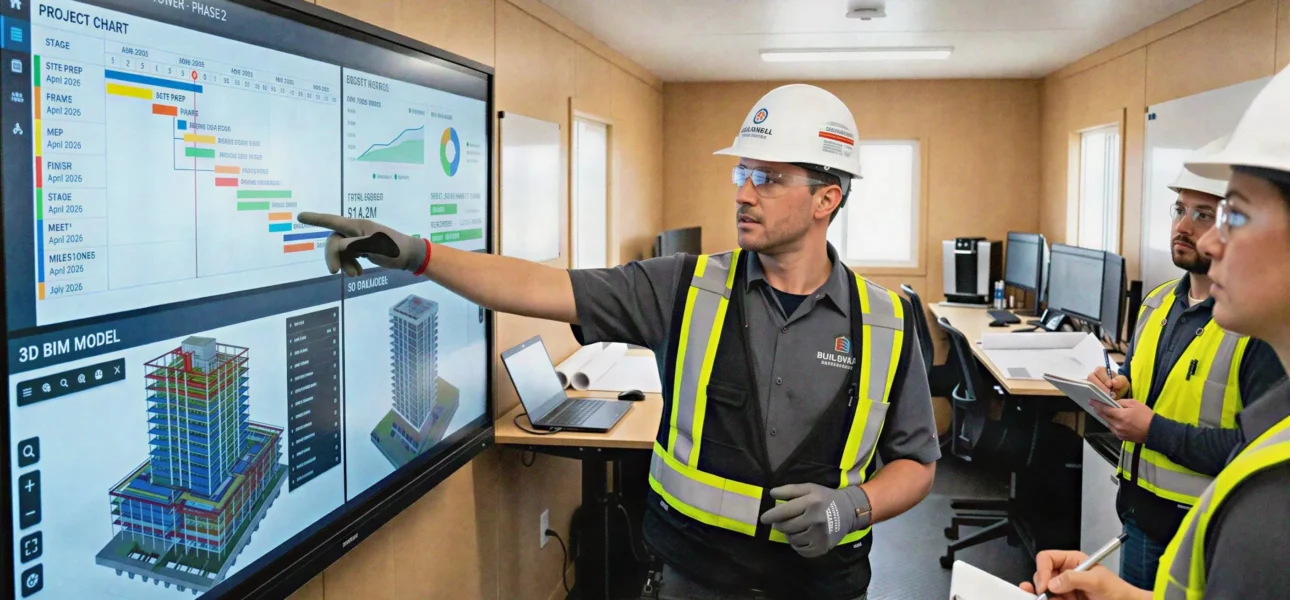
A construction project management system (often powered by cloud-based construction project management software) is a centralized digital platform designed to manage the entire project lifecycle from pre-construction to closeout. It is the single source of truth for drawings, budgets, schedules, and communication.
This system is the technological backbone of project controls—the processes and tools used to monitor and control cost, schedule, and quality. Without a robust system, project controls are just theoretical concepts. With it, they become actionable, measurable realities.
Key Features of Construction PM Systems
Not all software is created equal. A true construction project management software must have features tailored to the unique workflows of the building industry.
1. Document Management and BIM Integration The ability to store, share, and version-control drawings and specifications is paramount. The system should integrate with BIM (Building Information Modeling) software, allowing teams to view 3D models directly in the field and link model elements to specific tasks or issues.
2. Scheduling and 4D/5D Capabilities A modern system doesn’t just show a Gantt chart; it integrates 4D (time) and 5D (cost) data. This means you can simulate the construction sequence over time and instantly see the financial impact of a schedule delay.
3. Cost Control and ERP Integration The system must track budgets, commitments, approved changes, and forecasted costs in real-time. Integration with Enterprise Resource Planning (ERP) systems ensures that field data flows seamlessly into accounting, preventing billing errors and cash flow surprises.
4. Field Collaboration and Mobile Access The office and the field must be connected. The software should have a robust mobile app that allows supers to log daily reports, capture photos, and create and manage RFIs (Requests for Information) and Submittals directly from the job site.
5. Data Analytics and Dashboards The power of a PM system lies in its data. Customizable dashboards should provide at-a-glance views of project health, including cost-to-complete estimates, schedule variances, and safety incidents.
How PM Systems Improve Project Outcomes
The investment in a comprehensive construction project management system pays for itself many times over by mitigating the primary risks in construction.
1. Real-Time Visibility into Schedule and Budget In traditional projects, cost and schedule reports are often weeks out of date by the time they reach the owner. A PM system provides real-time dashboards. If a concrete pour is delayed by rain, the schedule is updated instantly, and the system automatically calculates the downstream effects on the critical path and budget.
2. Better Coordination Between Office and Field When the field team can instantly access the latest drawings on their tablet, the risk of building from an outdated set of plans—known in the industry as “rework”—is drastically reduced. Rework can account for up to 12% of total project costs; a PM system virtually eliminates it.
3. Reduced Rework and Change Orders By centralizing RFIs and Submittals, the system ensures that design questions are answered quickly and accurately. When architects, engineers, and contractors collaborate on a single platform, clashes are resolved digitally before they become expensive problems in the field.
Common Pitfalls When Implementing PM Systems
echnology is only as good as its adoption. Many contractors invest in expensive software but fail to realize its benefits because of these common mistakes:
1. Poor Data Quality A system fed garbage will output garbage. If the team enters sloppy data, skips fields, or fails to update the schedule, the dashboards will be useless. Implementation must be accompanied by strict data standards.
2. Over-Complicated Tools If the software is too difficult to use, the field team will revert to text messages and notepads. The best system is one that is intuitive and tailored to the specific needs of the users.
3. Lack of Leadership Buy-In If project managers and executives don’t mandate the use of the system, it will become just another unused tool. Leadership must rely on the system’s data to make decisions, forcing the team to keep it updated.
How Vazcondev Uses Technology to Manage Projects
At Vazcondev, we understand that smart technology is a core pillar of disciplined execution. We use modern project workflows to improve coordination, documentation, and visibility throughout the project.
Our approach to project controls is enhanced by technology:
- Transparent Reporting: We use technology to provide owners with clear, documented communication and financial controls so they always know the status of their investment.
- Proactive Risk Management: By tracking project data in real-time, we identify potential delays or cost overruns early and implement recovery plans before they impact the bottom line.
- Seamless Closeout: Our systems ensure that all documentation, as-builts, and warranties are compiled digitally during construction, resulting in a clean, organized turnover process.
Choosing the Right Construction PM Software
If you are selecting a PM system for your firm, consider these factors:
- Cloud vs. On-Premise: Cloud-based software is the industry standard, offering better accessibility, automatic updates, and lower IT costs.
- Integrations: Does the software integrate with the tools you already use, like Procore, Autodesk Construction Cloud, Sage, or QuickBooks?
- Ease of Use: Request a demo and involve your field superintendents in the evaluation. If they find it clunky, it won’t be adopted.
From System to Results
A construction project management system is not a silver bullet; it is an enabler. It enables better communication, faster decision-making, and tighter control over cost and schedule.
When combined with the disciplined processes and experienced personnel at Vazcondev, technology becomes a powerful competitive advantage. We don’t just use software to track projects; we use it to protect your investment and deliver predictable outcomes.
Want a construction partner who leverages technology for your benefit? Contact Vazcondev today to learn how our project management services can keep your project on track.