Why Local SEO Matters for Construction Companies
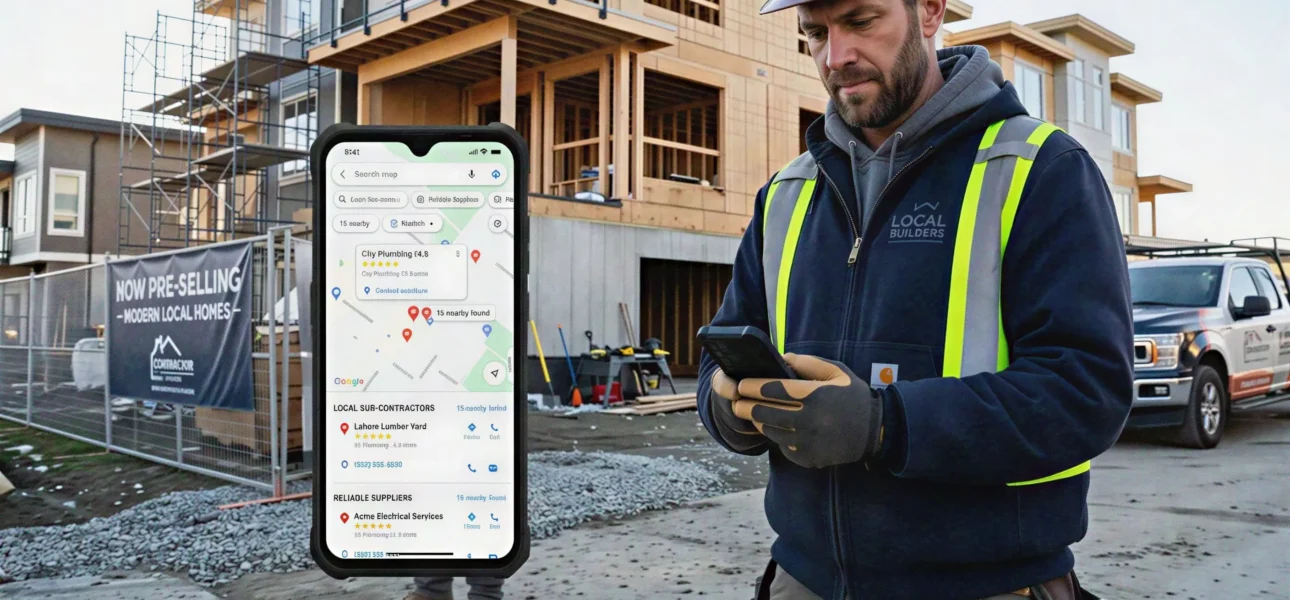
The construction industry is inherently local. When a developer needs a build-out, or a homeowner wants an addition, they don’t look for a contractor in another state. They search for a local construction company. They type queries like “construction company Orlando” or “commercial contractors near me.”
The statistics are staggering: over 90% of consumers use search engines to find local businesses, and “near me” searches have grown by over 900% in recent years. Furthermore, nearly 90% of people searching for local services contact only one company—and it’s almost always the one at the top of the local map pack.
If your construction company isn’t appearing in those top three map results, you are invisible to a massive pool of high-intent clients. Local SEO for construction companies is no longer an optional marketing tactic; it is the most cost-effective way to generate a predictable pipeline of qualified leads.
Core Local SEO Tactics for Construction Firms
Local SEO is a discipline distinct from traditional SEO. It focuses on signals that tell search engines where your business is and where you provide services. Here are the core pillars:
1. Optimize Your Google Business Profile (GBP) Your GBP is your digital storefront and the single most important factor in local map rankings. To optimize it:
- Claim and Verify: Ensure you claim your profile and verify your business address.
- Complete Every Field: Fill out your hours, phone number, website, and services.
- Categories: Choose the most accurate primary category (e.g., “General Contractor”) and relevant secondary categories (e.g., “Construction Company,” “Real Estate Developer”).
- Photos and Videos: Upload high-quality photos of your completed projects, your team, and your job sites. Profiles with photos get significantly more engagement.
2. Use Local Keywords Your website must feature the keywords your clients are actually using. This means integrating “construction company [City]” and your specific service areas into your website’s title tags, headers, and body content. If you serve multiple cities, don’t just list them on a single page; create dedicated service pages for each location.
3. NAP Consistency and Local Citations NAP stands for Name, Address, and Phone number. This information must be identical across your website, your Google Business Profile, and every online directory (Yelp, Angi, BBB, etc.). Inconsistent NAP information confuses search engines and hurts your local rankings. Building these listings across the web is known as creating “local citations.”
On-Page SEO for Local Construction Companies
Your website needs to speak the language of both users and search engines.
1. Create Location Pages If Vazcondev works across the USA, we need to signal to Google the specific regions we serve. Creating location-specific pages (e.g., “Commercial Construction in Altamonte Springs”) allows you to embed Google Maps, feature local project case studies, and use hyper-local keywords that competitors miss.
2. Local Content: Case Studies and Community Involvement Don’t just say you build things; prove it locally. Write detailed case studies of your projects that mention the neighborhood, the local permitting challenges you overcame, and the specific materials used. Highlight community involvement or local sponsorships. This content is highly relevant to local search algorithms.
3. Mobile Optimization Most “near me” searches happen on mobile phones. If your website isn’t mobile-responsive, loads slowly, or has buttons that are hard to tap, users will bounce. Google penalizes sites with poor mobile experiences.
Content That Supports Local SEO
Content marketing isn’t just for global brands. Local content builds authority and trust.
- Blog Posts: Write about topics relevant to your local market. “How to Navigate Building Permits in [City],” or “Top 5 Home Design Trends in [State].”
- FAQs: Create a Frequently Asked Questions page addressing local concerns. “Do I need a permit for a shed in [County]?” This captures long-tail, voice-search queries.
- Project Spotlights: Feature your best work with details about the location and the client’s needs. This naturally incorporates local keywords.
Reviews and Reputation Management
Reviews are the lifeblood of local SEO. Google uses review velocity (how many reviews you get consistently) and review keywords (words people use in their reviews) as major ranking factors.
1. Ask for Reviews Proactively Don’t wait for them to happen. Send an email to clients after a successful project asking them to leave a review on your Google Business Profile. Make it easy by providing a direct link.
2. Respond to All Reviews Whether it’s a 5-star raving review or a 1-star complaint, respond professionally and politely. Thanking a client for a positive review shows appreciation. Addressing a negative review shows future clients that you care about resolving issues.
Measuring Local SEO Performance
Reviews are the lifeblood of local SEO. Google uses review velocity (how many reviews you get consistently) and review keywords (words people use in their reviews) as major ranking f
How do you know if your local SEO strategy is working? Track these key metrics:
- Map Pack Rankings: Where does your business appear in the local map results for your target keywords?
- Google Business Profile Insights: How many people are calling, visiting your website, or requesting directions directly from your GBP?
- Website Traffic: Use Google Analytics to track how much organic traffic is coming from local search terms.
1. Ask for Reviews Proactively Don’t wait for them to happen. Send an email to clients after a successful project asking them to leave a review on your Google Business Profile. Make it easy by providing a direct link.
2. Respond to All Reviews Whether it’s a 5-star raving review or a 1-star complaint, respond professionally and politely. Thanking a client for a positive review shows appreciation. Addressing a negative review shows future clients that you care about resolving issues.
How Vazcondev Approaches Local SEO
As a construction and real estate development company serving clients across the United States, Vazcondev understands the power of local presence. While our capabilities are national, our commitment is to the communities we build in.
We apply our own local SEO best practices by ensuring our project portfolios highlight the specific regions we serve, maintaining active and optimized business profiles, and generating content that speaks to the specific development and construction needs of different states and municipalities.
Your Local SEO Action Plan
If you want to stop losing leads to the contractor down the street, you must dominate local search. Start with this checklist:
- Claim and fully optimize your Google Business Profile.
- Audit your website for NAP consistency and mobile-friendliness.
- Create dedicated service pages for the cities you serve.
- Implement a system to consistently ask clients for Google reviews.
- Publish local content and case studies regularly.
Local SEO is a marathon, not a sprint. But by consistently applying these tactics, you will build a powerful online presence that drives qualified leads for years to come.
Looking for a construction partner with a strong local presence? Contact Vazcondev today to discuss your project.