
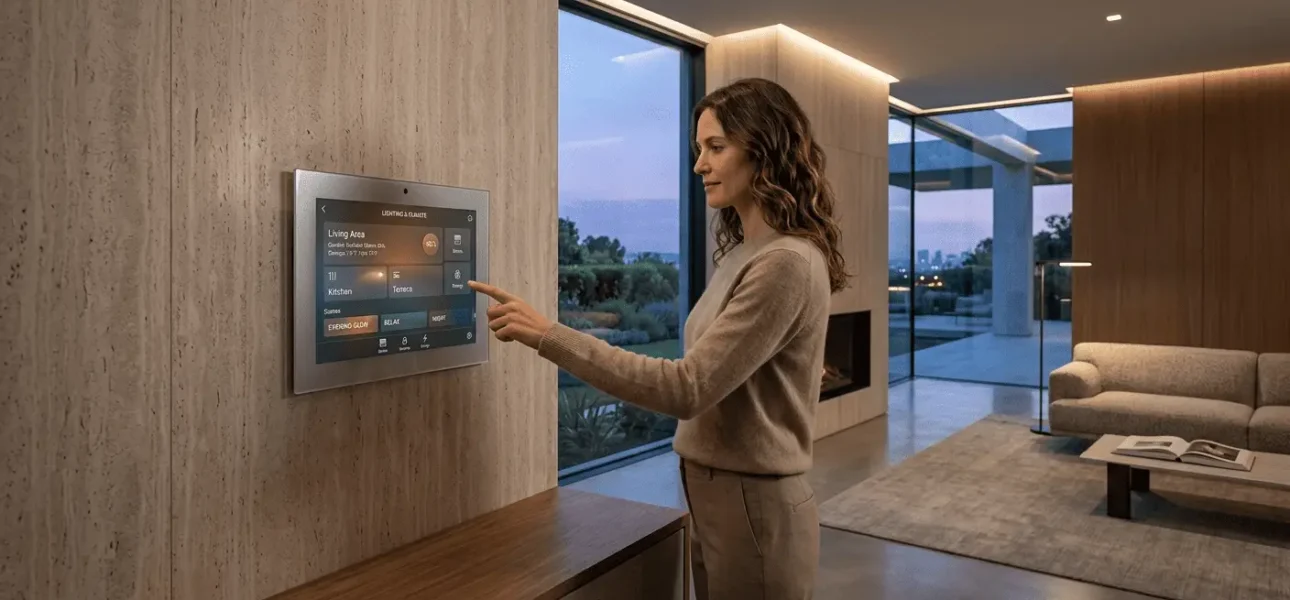
Why Smart Home Technology Matters in 2026
The concept of the “smart home” has undergone a radical transformation. A decade ago, home automation was a niche, highly expensive luxury—complex custom systems that required specialized programmers to change a light setting. Today, smart home technology is mainstream, affordable, and, most importantly, wireless.
However, mainstream does not mean “afterthought.” In 2025, as homeowners demand seamless integration, energy efficiency, and remote security, the true differentiator of a smart home is not the gadgets, but the infrastructure behind the walls. Retrofitting an older home with smart technology often means dealing with dead zones, unsightly surface-mounted wires, and limited functionality.
When you build new, you have the unique opportunity to hardwire the foundation for a flawless, scalable, and reliable smart home ecosystem. Incorporating smart home construction practices during the design phase ensures your home is not just smart today, but future-proofed for the technologies of tomorrow.
Popular Smart Home Features for New Homes
When planning your new home, it helps to understand the categories of technology you will want to integrate:
1. Lighting and Shading Control Gone are the days of walking around flipping switches. Modern smart lighting allows you to control individual rooms or the entire house from your phone or voice assistant. Motorized shades that respond to the position of the sun can drastically reduce cooling costs and protect furniture from UV damage.
2. Security and Access Smart locks, video doorbells, and high-definition security cameras provide peace of mind whether you are home or across the globe. Advanced systems now include facial recognition and package-detection alerts.
3. Whole-Home Energy Monitoring and HVAC Smart thermostats are just the beginning. Whole-home energy monitors track the electricity usage of individual circuits, helping you identify waste. Integrated with smart HVAC zoning, these systems heat and cool only the rooms you are occupying, slashing utility bills.
4. Entertainment and Audio Whole-home audio systems, outdoor entertainment zones, and hidden home theaters are incredibly popular. Planning speaker placement and wiring during construction ensures pristine sound without visible wires.
Infrastructure You Need During Construction
This is the most critical section of this blog. The smart devices you buy off the shelf rely on one thing: robust, reliable connectivity. If your Wi-Fi doesn’t reach the garage, your smart garage door isn’t very smart.
To ensure flawless home automation, your contractor must plan for the following infrastructure during construction:
1. Wired Networking (Cat6/Cat6a) Do not rely solely on Wi-Fi. A hardwired network is the backbone of a reliable smart home. Plan for Ethernet (Cat6 or Cat6a) drops in every room, especially behind smart TVs, in the office, at the security camera locations, and at the main control hub. Hardwiring high-bandwidth devices takes the strain off your Wi-Fi network, ensuring smooth streaming and instant device responses.
2. The Smart Panel and Home Run Location All your networking gear (router, switches) and automation controllers should be centralized in one “home run” location, typically a smart panel in a utility closet or garage. This keeps the system organized, cool, and accessible for troubleshooting.
3. Neutral Wires Everywhere Older homes often skipped neutral wires in light switch boxes to save copper. However, almost all smart switches require a neutral wire to maintain power to their internal radios. Ensure your electrician runs neutral wires to every switch box in the house—it adds minimal cost during construction but is impossible to add later without cutting into walls.
4. Conduit for Future-Proofing Technology changes rapidly. Running empty conduit from your home run location to the attic and major wall cavities allows you to pull new cables (like fiber optics or newer standards) in the future without cutting into drywall.
How to Plan Smart Home Integration Early
1. Involve Your Builder and Electrician Early Discuss your smart home goals with your contractor before the framing begins. They need to know if you plan to install motorized shades (which require power at the top of the window), smart mirrors in the bathroom, or an outdoor entertainment area so they can route power and data accordingly.
2. Choose Your Ecosystem/Protocols Decide on your primary ecosystem (e.g., Apple HomeKit, Google Home, Amazon Alexa, or a professional system like Control4). Additionally, ensure the smart devices you choose use modern, interoperable protocols like Matter, which allows devices from different brands to work together seamlessly.
3. Design for Aesthetics Smart home technology should enhance your life, not clutter your walls. Plan for centralized keypads that control multiple functions (lights, shades, music) instead of having three separate switches on a wall.
Common Mistakes in Smart Home Construction
Avoid these pitfalls when building your smart home:
- Assuming “Wireless” Means No Infrastructure: As mentioned, wireless devices still need robust wired backhaul and power. Failing to install access points and Ethernet drops will result in a frustrating, laggy system.
- Fragmented Systems: Buying piecemeal smart devices from different brands that don’t communicate with each other results in a cluttered app experience. Plan for a unified system.
- Forgetting Outdoor and Garage Spaces: Smart irrigation, outdoor security, and electric vehicle (EV) charger readiness require dedicated circuits and data lines. Plan for them now.
Vazcondev’s Approach to Smart-Ready Construction
At Vazcondev, we build homes that are as dynamic as the people who live in them. We understand that a modern home must be technologically equipped for the future.
Our residential construction approach involves coordinating closely with owners, architects, and technology integrators during the pre-construction phase. We ensure that the infrastructure for smart home technology—neutral wires, Cat6 drops, dedicated circuits for EV chargers, and power for motorized shades—is seamlessly integrated into the framing and electrical plans. By combining smart technology with our commitment to quality control, we deliver homes that are not just beautiful, but brilliantly functional.
Making Your Home Future-Ready
Smart home technology is evolving from a cool novelty to an essential utility, much like indoor plumbing or electricity. By integrating smart home infrastructure during the new construction process, you ensure your home remains adaptable, efficient, and secure for decades to come.
Don’t wait until the drywall is up to think about connectivity. Plan early, wire smartly, and enjoy a home that works as hard as you do.
Ready to build a home that’s ready for the future? Contact Vazcondev today to discuss our smart-ready residential construction services.