Why Green Building Matters More Than Ever
For decades, sustainable construction was viewed as a premium add-on—a luxury reserved for eco-enthusiasts willing to pay a premium for solar panels and bamboo flooring. Today, the landscape has fundamentally shifted. Green building is no longer optional; it is the baseline for modern, responsible, and financially viable construction.
Several factors are driving this shift in 2025 and beyond:
- Regulatory Mandates: Building codes across the USA are rapidly tightening, requiring higher energy efficiency and lower carbon footprints for new constructions.
- Federal Incentives: The Inflation Reduction Act (IRA) has unleashed unprecedented funding and tax credits for clean energy and sustainable building practices, making eco-friendly construction financially lucrative.
- Market Demand: Tenants and homebuyers actively seek energy-efficient, healthy spaces. Buildings with green certifications command higher rents and sell faster than their conventional counterparts.
Sustainable construction is no longer just about saving the planet; it is about reducing operating costs, complying with the law, and maximizing asset value.
Key Green Building Trends in 2025-26
The definition of eco-friendly construction is expanding beyond simple energy efficiency. Here are the top trends shaping the industry:
1. Sustainable Building Materials The embodied carbon of a building—the carbon emitted during the manufacturing and transportation of materials—is under intense scrutiny. Developers are moving away from traditional Portland cement concrete (which is highly carbon-intensive) toward low-carbon alternatives like mass timber, recycled steel, and fly-ash concrete. Additionally, the use of reclaimed wood, recycled glass countertops, and locally sourced materials minimizes transportation emissions and supports local economies.
2. High-Performance Building Envelopes The most efficient way to reduce a building’s carbon footprint is to reduce its energy demand. High-performance insulation, triple-pane low-emission windows, and advanced sealing techniques create an airtight building envelope that requires significantly less HVAC energy to heat and cool.
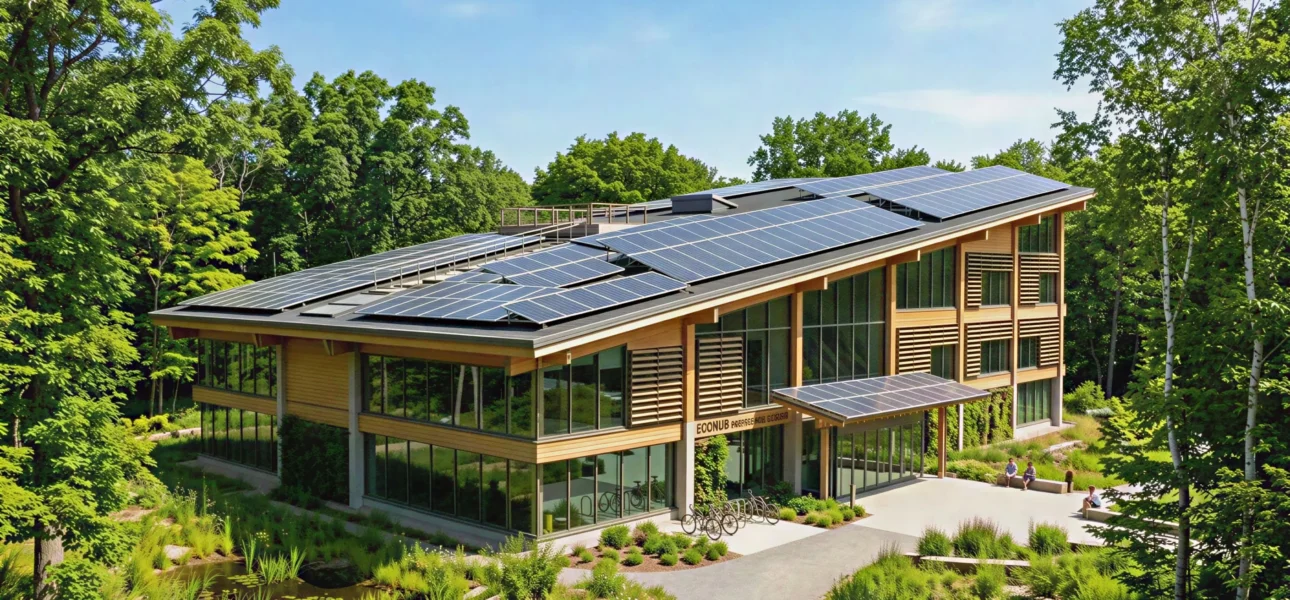
3. Solar Integration and Electrification With the continuation of IRA incentives, solar installations are becoming ubiquitous. But rather than tacking on solar panels as an afterthought, modern design integrates them directly into the building—using solar roofing tiles or building-integrated photovoltaics (BIPV). Furthermore, the industry is moving toward full electrification, eliminating fossil fuels (gas) in favor of high-efficiency electric heat pumps and induction cooking.
4. Rainwater Harvesting and Water Conservation As droughts become more common, water efficiency is critical. Sustainable building materials now include low-flow fixtures, greywater recycling systems, and rainwater harvesting setups that capture water for irrigation and toilet flushing, drastically reducing municipal water usage.
The Business Case for Green Building
The perception that green building is prohibitively expensive is outdated. While there can be a slight premium on the upfront capital expenditure (CapEx), the reduction in operational expenditure (OpEx) delivers a rapid return on investment.
- Lower Operating Costs: Energy-efficient systems and high-performance envelopes can reduce utility bills by 30% to 50%. Over a 20-year building lifecycle, this operational savings far outweighs the initial construction premium.
- Higher Asset Value: Commercial spaces with LEED or ENERGY STAR certifications command rent premiums of 10% to 20% and have significantly higher occupancy rates. Buyers are willing to pay more for buildings with lower operating risks and modern, healthy amenities.
- Compliance and Risk Mitigation: Building codes are only getting stricter. Constructing to current minimum code means your building will be obsolete in a decade. Building to green standards future-proofs your asset against regulatory changes and potential carbon taxes.
How Vazcondev Supports Sustainable Construction
At Vazcondev, our sustainability commitment is integrated into our core values. We support efficient materials and smarter building solutions that enhance long-term performance and lower operating costs.
We integrate sustainability during the pre-construction phase through:
- Value Engineering for Efficiency: We help owners select the right insulation, windows, and HVAC systems that balance upfront costs with long-term energy savings.
- Constructability for Airtightness: High-performance envelopes require meticulous construction to eliminate air leaks. Our quality control processes ensure that the design’s efficiency goals are realized in the field.
- Material Sourcing: We work with subcontractors and suppliers to identify locally sourced, low-VOC (Volatile Organic Compound), and sustainable materials that meet the project’s aesthetic and budgetary requirements.
Practical Ways to Build Greener (Without Blowing the Budget)
You don’t have to pursue the highest level of LEED certification to build sustainably. Here are practical, cost-effective strategies:
- Prioritize the Envelope: If you have a limited budget, spend it on the building envelope—insulation, windows, and air sealing. It is much harder to upgrade the envelope later, whereas mechanical systems can be swapped out more easily.
- Use Life-Cycle Cost Analysis (LCCA): Don’t just look at the sticker price of a system. Evaluate the total cost of ownership, including maintenance, energy, and replacement costs. A cheaper HVAC unit that guzzles electricity will cost more over 15 years than a highly efficient one.
- Design for Durability: Building a structure that lasts 100 years instead of 50 is inherently sustainable because it defers the massive environmental cost of demolition and reconstruction. Use durable materials like fiber-cement siding and metal roofing.
Green Building for Commercial vs. Residential Projects
The focus of sustainability shifts slightly based on the asset class:
- Commercial: The focus is on Energy Use Intensity (EUI), LEED certification for corporate ESG goals, and occupant wellness (access to daylight, non-toxic materials). The Inflation Reduction Act’s tax credits for commercial solar and energy efficiency are massive drivers.
- Residential: Homeowners are focused on comfort, indoor air quality, and lower utility bills. Smart home technology is heavily integrated to manage energy use, and health-centered design—using non-toxic materials and advanced air filtration—is a top priority.
Next Steps for a Greener Project
Sustainable construction is a journey that begins at the earliest stages of planning. By setting clear environmental goals during pre-construction and partnering with a contractor who understands how to execute high-performance building practices, you can create a space that is good for the environment, good for the occupants, and good for your bottom line.
Vazcondev delivers commercial and residential projects through a disciplined process, ensuring that sustainability and quality go hand in hand.
Ready to build a high-performance, sustainable asset? Contact Vazcondev today to explore our eco-friendly construction capabilities.