The True Cost of Poor Construction Safety
In the construction industry, safety is too often viewed as a regulatory burden—a set of rules imposed by OSHA that must be followed to avoid fines. This mindset is not only dangerous but financially foolish. Poor construction safety is one of the fastest ways to derail a project and destroy profitability.
When a severe accident occurs on a jobsite, the immediate human cost is devastating, but the financial ripple effects are also catastrophic. They include:
- Direct Costs: Workers’ compensation claims, medical bills, and OSHA fines.
- Indirect Costs: These are often four to ten times higher than direct costs. They include project shutdowns during investigations, legal fees, increased insurance premiums, lost productivity from demoralized crews, and the cost of replacing damaged equipment or materials.
- Reputational Damage: In the age of social media and online reviews, a jobsite fatality or serious injury can irreparably damage a contractor’s reputation, making it difficult to attract top talent and secure work from discerning developers.
Conversely, a strong jobsite safety culture is a competitive advantage. It protects the most valuable asset—the workforce—while ensuring the project stays on schedule and within budget.
Key Construction Safety Standards & Regulations
While federal OSHA provides the baseline for construction safety standards, many states and municipalities have their own, more stringent regulations. A comprehensive safety program must address the “Fatal Four” in construction, which account for the majority of worker deaths:
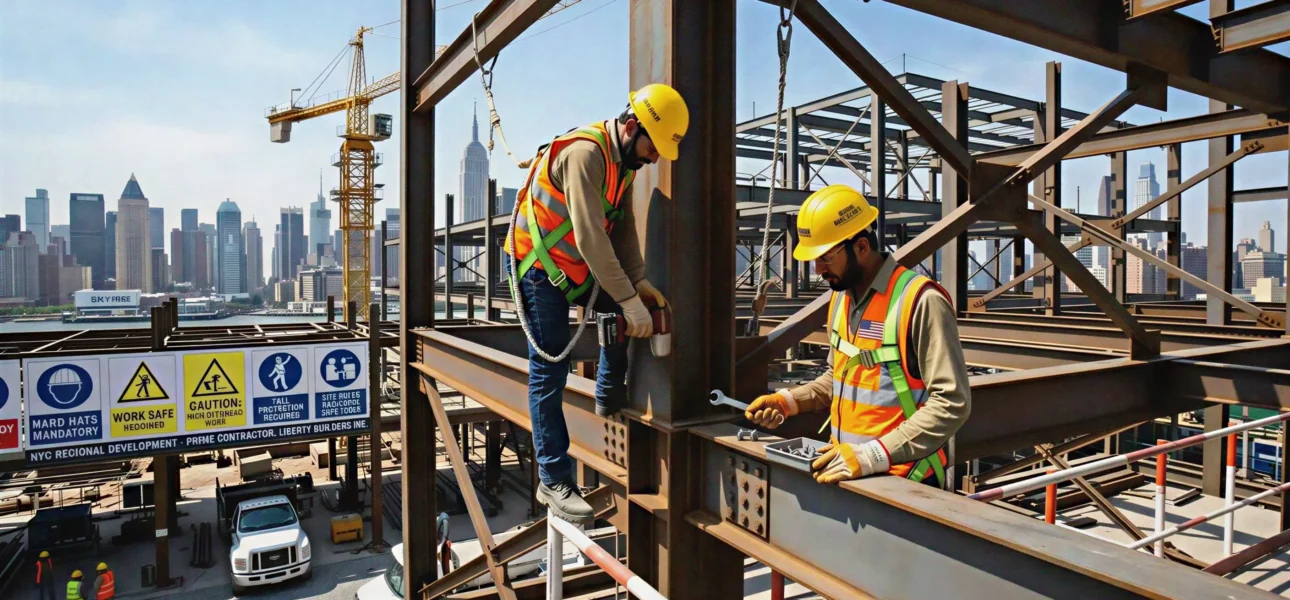
- Falls: The leading cause of death in construction. Standards require fall protection at heights of six feet in construction (and higher in general industry), along with proper scaffolding, ladder safety, and guardrail systems.
- Struck-By Objects: Protection from falling tools, debris, and swinging equipment. This requires hard hats, toe boards on scaffolds, and high-visibility clothing.
- Electrocution: Safety standards mandate proper grounding, ground-fault circuit interrupters (GFCIs), and maintaining safe distances from overhead power lines.
- Caught-In/Between: Hazards involving trench collapses, unguarded machinery, and equipment rollovers. Standards require trench protective systems (like shoring or shielding) and machine guarding.
Beyond the Fatal Four, modern safety standards increasingly focus on health and wellness, including silica dust mitigation, hearing conservation, and heat illness prevention—a critical issue as global temperatures rise.
How Safety Impacts Schedule and Budget
The connection between safety and profitability is undeniable. A safe project is a productive project. Here is how construction safety directly impacts the bottom line:
1. Eliminating Downtime When a serious incident occurs, work stops. OSHA may shut down the site for investigation, and crews stand idle while the situation is resolved. Lost time equals lost money, especially on projects with liquidated damages for late completion.
2. Reducing Rework and Material Waste A safety-first mindset inherently promotes a quality-first mindset. When workers are rushing, ignoring protocols, or working in unsafe conditions, mistakes happen. A dropped load of lumber, a mispoured concrete wall due to rushing, or a cut utility line all represent wasted materials and labor that must be paid for twice.
3. Lowering Insurance and Workers’ Compensation Costs A contractor’s Experience Modification Rate (EMR) is a metric used by insurance companies to gauge past safety performance. An EMR above 1.0 indicates a higher-than-average risk, leading to exorbitant insurance premiums. A strong safety record lowers the EMR, directly reducing overhead costs and making the contractor’s bids more competitive.
- Falls: The leading cause of death in construction. Standards require fall protection at heights of six feet in construction (and higher in general industry), along with proper scaffolding, ladder safety, and guardrail systems.
- Struck-By Objects: Protection from falling tools, debris, and swinging equipment. This requires hard hats, toe boards on scaffolds, and high-visibility clothing.
- Electrocution: Safety standards mandate proper grounding, ground-fault circuit interrupters (GFCIs), and maintaining safe distances from overhead power lines.
- Caught-In/Between: Hazards involving trench collapses, unguarded machinery, and equipment rollovers. Standards require trench protective systems (like shoring or shielding) and machine guarding.
Beyond the Fatal Four, modern safety standards increasingly focus on health and wellness, including silica dust mitigation, hearing conservation, and heat illness prevention—a critical issue as global temperatures rise.
Building a Safety-First Culture
Safety isn’t a poster on a wall; it’s a culture. Building this culture requires commitment from the top down.
- Leadership Commitment: When project executives and site superintendents prioritize safety over speed, the message resonates throughout the crew. If a worker stops work because of an unsafe condition and is praised rather than punished, the culture is real.
- Continuous Training: Safety is not a one-time orientation. It requires daily toolbox talks, weekly safety meetings, and ongoing training for specialized tasks (like confined space entry or crane signaling).
- Near-Miss Reporting: A near-miss is an incident that didn’t result in injury but had the potential to. Encouraging workers to report near-misses without fear of reprisal allows management to correct hazards before someone gets hurt.
Vazcondev’s Safety Standards
At Vazcondev, we understand that predictable project outcomes cannot be achieved in an unsafe environment. Our commitments define how we work on every project, and safety is at the forefront.
- Safety & Professionalism: We run organized jobsites with safety-first standards and respectful conduct from all teams. This protects people, property, and productivity, while delivering a smoother project experience.
- Organized Jobsites: A clean, organized site is a safe site. We enforce strict housekeeping protocols to eliminate trip hazards and ensure proper material storage.
- Documented Protocols: Our approach includes rigorous safety planning during pre-construction, ensuring that high-risk activities are identified and mitigated before work begins.
We believe that no schedule is so urgent, and no budget so tight, that it justifies compromising the safety of our teams or our clients’ property.
Practical Ways to Improve Jobsite Safety
Whether you are a developer, a contractor, or a project manager, you can advocate for better safety on your projects by ensuring:
- Pre-Construction Safety Planning: Safety should be planned just like the budget and schedule. Conduct Job Hazard Analyses (JHAs) for all high-risk tasks.
- Clear Roles and Responsibilities: Designate a competent person on-site who has the authority to identify and correct hazards.
- Proper Equipment Maintenance: Ensure all heavy machinery, power tools, and safety equipment (like harnesses and lanyards) are regularly inspected and well-maintained.
- Weather Protocols: Have clear policies for lightning, high winds, extreme heat, and cold, and enforce them without exception.
Safety as a Competitive Advantage
In an industry where profit margins are tight and schedules are aggressive, safety is the ultimate differentiator. It is not a cost center; it is a value driver. By reducing downtime, lowering insurance costs, and attracting top-tier talent who want to work for responsible employers, construction safety standards protect your most significant investments.
When you choose a partner like Vazcondev, you are choosing a team that believes disciplined execution and safety-first operations are the bedrock of long-term value.
Looking for a contractor who protects your timeline, budget, and workforce? Contact Vazcondev today to learn about our safety-first approach to construction.